


Politics, Young People, and Platforms
- Nov 13, 2020
- 4 min read
Hello readers! As a college student interested in political science, politics is something that is often on my mind, especially during election season and a pandemic. In previous posts, I have discussed the role of the influencer, as well as social media’s effects on college, career, and mental health. In today’s post, I’m talking about what could be argued as social media’s biggest impact: its impact on politics and young people.
Social Media platforms have changed politics by:
Changing the way young people approach political news and politics
Changing how young people approach voting
Changing how young people approach activism
Platforms and Political News
The main way that social media has changed political news consumption for young people is through the social media platform, Twitter. John Parmelee of Politics and the Twitter Revolution says that politics on Twitter is like “the practice of lobbying.” It is a source that is constantly headlining political news and is often a place where Generation Z users will go to find out information quickly.
In my own experience, I have found that more often than not news breaks on Twitter first. Some prime examples I have of this are throughout my high school years when news regarding school or mass shootings would break and students found out prior to many teachers and parents due to their use of social media throughout the school day. With a platform like Twitter being at the fingertips of many people, “news” can get out into the world more quickly than a news anchor can report on it.
Another platform that has changed the way young people approach politics is Instagram.
Instagram for the 2020 election had constant updates regarding results and voting status. On the home feed of any Instagram user a pop up notification, like the one pictured below, would give users updates regarding the status of the election.

Before a user could even scroll through their feed, this notice would pop up. This notification, although may seem inconvenient or possibly even annoying, allowed young people to stop and think about the election and maybe even become more educated on social and political news instead of just scrolling through their feeds aimlessly (something we are all guilty of).
Even Snapchat and Facebook had involvement with updating users on political news, with notifications similar to those of Instagram.
Generation Z, Social Media, and Voter Turnout
In recent years, young voter turnout has increased. According to an article by NBC Connecticut, young voter turnout is expected to be at 53% for the 2020 election, topping the 51% in 2008 (Pransky). It can be concluded that due to the rise of social media since 2008, social media is a major contributor to Generation Z voters coming out to vote in this year’s election.
Being a first-time Generation Z voter this year and being an active user of social media myself, I can attest that Instagram and Twitter were flooded with voting information and encouragement from my peers, celebrities, and leaders leading up to election day.
For example, Instagram had a special voting story where an icon would appear if a user highlighted voting efforts and Snapchat and Instagram both had available voting stickers, filters, and icons that users could interact with to encourage people to get out and vote. According to Loyola Marymount University, “infographics on Instagram have brought knowledge to the public and have encouraged users to use their power to vote” (Norman 2020).
Users everywhere were encouraged to post their voting experiences offering inspiration for others to go out and vote safely during the pandemic.
How Activism Has Changed Due to Social Media
Activism is something at the forefront of the world. I would say that there isn’t a day that goes by where I go on social media and don’t see information about a social or political issue that I personally can become more educated on and potentially become an activist for.
With social media platforms' capabilities of providing links to more information, activism is easier than ever. Even with more traditional forms of activism like protests or marches, social media has made those even more popularized and publicized. According to an article from Design Digital Marketing, to say that the reach of activism and movements “wouldn’t be substantial without the influence of social media, the ability to share information on critically important social issues like this has been made inherently easier by technological evolution” (Josh of Digital Design Marketing). Social media has made activism more reachable to not just the people and issues activists are fighting for, but to the general public.
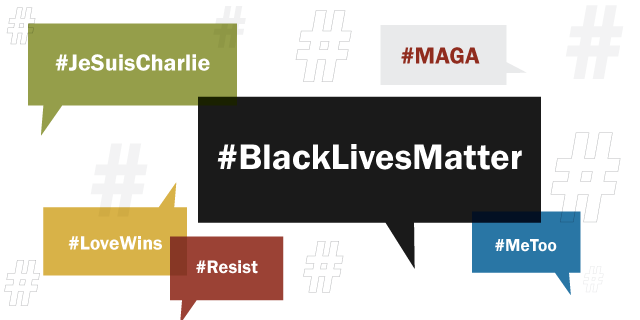
Social media has become young people's outlet for action. They use their own platforms to express their voices and inspire others to do the same. With loads of campaigns, challenges, and plain-old post awareness, the youth is using social media as its own form of modern day activism.
Throughout my last few posts, we have touched on social media’s benefits and social media’s downfalls. But, and I think it is safe to say, that despite the benefits and/or downfalls, social media runs the world we live in and pretty much every aspect of it. It affects our daily lives, even for people who aren’t heavy users of the internet. It affects the knowledge of the general public, interactions, and documentation of events. Social media has changed everything and it is important for us to recognize that, especially when it is documenting and creating what will be known as our history.
I encourage you to think about social media affects your life and your community. Who are the "influencers" in your life? Are you a social media activist? Does the role of politics on social media affect you? I would love to know. Feel free to leave me a comment on my contact page. Together, we can learn more about our roles in the 21st century when it comes to the internet and social media.


Comments